



- Posted On: 03 Sep 2026
-

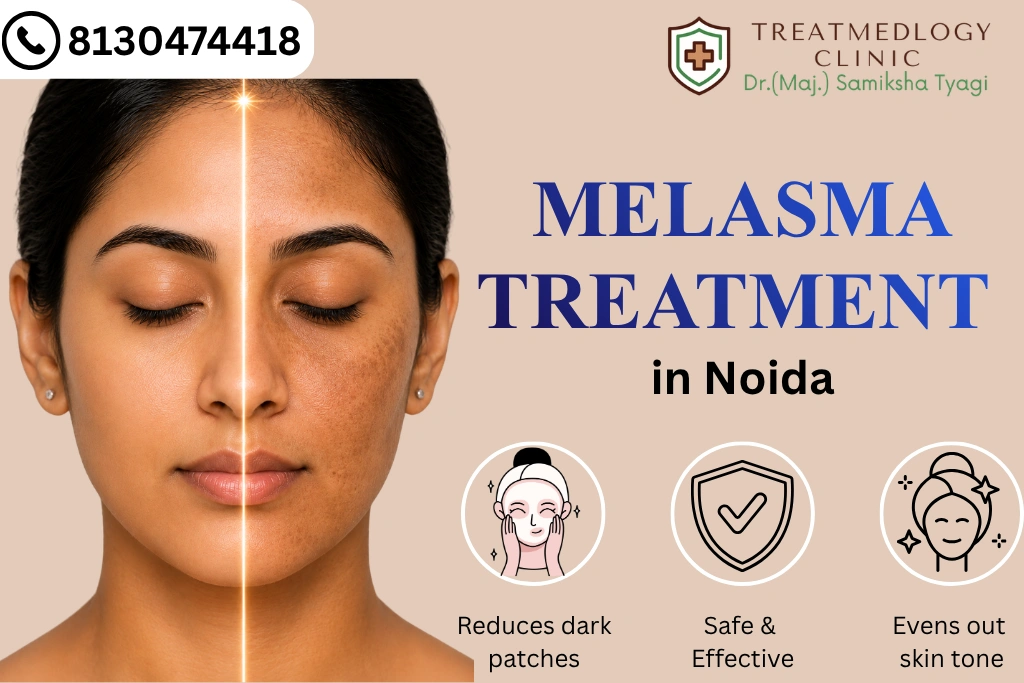
Melasma Treatment in Noida
Do you see brown marks on your cheeks, forehead & nose or upper lip that do not seem to fade? You might have applied a new cream, face pack, or home remedy believing it was tanning. Patches can even go from light to dark after sunlight exposure.
If that rings a bell, basically you may be having melasma.
Melasma is a common skin disorder that causes dark or brown patches on the skin. It is not dangerous or contagious, but can be annoying as it may take a long time to improve and can even come back.
The good news is that with the right treatment and consistent sun protection, melasma can often be well managed and substantially improved. What matters is knowing the reason for your pigmentation rather than throwing money at random products or treatments.
In this guide, we will lay down the basics of melasma - what it is, what causes it, what the treatments for melasma are, how long they could take to work, and also how you can prevent your hyperpigmentation from returning.
What is the Best Treatment for Melasma?
There is no single treatment that works for everyone with melasma.
Treatment typically depends on the darkness of the pigmentation, its appearance, your skin type, and what might be triggering it.
Common treatment options include:
- Sunscreen and protection from sunlight
- Pigmentation-reducing creams
- Azelaic acid and other prescribed medicines
- Chemical peels
- Selected laser or light-based treatments
- Microneedling & Mesotherapy
Combination of treatment when applicable
Protecting your skin from the sun every day is the most crucial part of treatment. Melasma can return even after a successful treatment if sun protection is inadequate.
What is Melasma?
Melasma is a type of skin disorder that causes brown, grey-brown, or sometimes darker patches on the face.
It commonly appears on:
- Cheeks
- Forehead
- Nose
- Upper lip
- Chin
- The patches typically appear on both sides of the face.
Melasma tends to be more common in women, especially during hormonal changes, but men can also develop it.
All dark patches are not melasma. All pigmentation problems like acne marks, tanning, and sun spots can look alike. So the first step to properly select your treatment is to determine what the real underlying issue is.
Why Does Melasma Happen?
Melasma usually does not have just one cause. There are many things that can lead to it.
1.Sunlight
One of the worst triggers is sun exposure. Even mild and daily direct sunlight exposure can darken existing pigmentation.
2. Hormonal Changes
Melasma is also known as the "mask of pregnancy" because it can be triggered by hormones at that time.
Some women may have it triggered or increased by hormonal contraceptives as well as other hormonal changes around menopause.
3. Family History
If your parents or close family members have had melasma, you may be more likely to develop it.
4. Heat and Skin Irritation
In certain individuals, too much sun exposure and irritation induced by aggressive skin care can aggravate pigmentation.
5. Certain Medicines
Certain drugs or medical conditions may contribute to pigmentation. This is the reason your doctor may ask about your medical history and medication during consultation.
How Can You Tell if You Have Melasma?
Melasma is most commonly recognized by a doctor by looking at:
- The color and pattern of the patches
- Where the pigmentation appears
- How long you have had the patch
- If it darkens after Sun exposure
- Your skincare routine
- Hormonal history
Previous pigmentation treatments
This is important because treating melasma is different from treating acne marks or ordinary tanning.
Can Melasma Recur After Treatment?
Yes. Melasma is a recurrent and trigger-sensitive pigmentation condition, so it can even reappear after successful treatment. Recurrence is fairly common, but reported rates vary widely (often at an approximate 30–50% threshold or more), and will depend on treatment used, the severity of melasma, sun exposure factors, hormonal factors, and maintenance care.
Melasma can recur when you are exposed to:
- Sun and heat exposure
- Excessive heat and sweating
- Not wearing sunscreen or skipping maintenance skincare
- Pregnancy and hormonal changes
- Some individuals may receive hormonal medications or contraceptive pills
- Genetic predisposition
Exposure to visible light
That is why melasma treatment should be followed by long-term sun protection and a suitable maintenance routine. While treatment can significantly reduce pigmentation and improve the appearance of melasma, consistent skincare and trigger control are important to help reduce the chances of recurrence.
Melasma Treatment Options
1.Sunscreen: The First Step
When you have melasma, sunscreen is not optional— it is an important part of skin care.
Apply a broad-spectrum sunscreen with SPF 30 or above each time you go out. Iron oxides in tinted sunscreens may also shield from visible light, which can increase pigmentation.
You can also protect your skin by:
- Wearing a hat outdoors
- Avoiding the sun, whenever you can
- Avoiding unnecessary direct sunlight
- Reapplying sunscreen when required
Note: Treatment must be used with sun protection.
2. Pigmentation-Reducing Creams
A doctor may prescribe creams, depending on how your skin responds as well as the degree of melasma.
They may include components such as:
- Hydroquinone
- Tretinoin
- Azelaic acid
- Other pigmentation-reducing ingredients
There are some combinations of medicines that work well, but they should not be used randomly or for longer durations without prescription.
Irritation can make pigmentation worse sometimes, so using too strong a product may irritate your skin.
3. Tranexamic Acid
Another treatment that can be effective for resistant melasma is tranexamic acid. Your doctor will recommend it only after taking into account your medical history and any risks.
4. Chemical Peels
One can remove some of the excess pigmentation on the surface of the skin to bring clarity in tone with a chemical peel.
Peels do occasionally irritate the skin, and this sometimes leads to more pigmentation. So based on your skin type, decide what type and strength of peel suits you.
5. Laser and Light Treatments
Some individuals with melasma respond to certain lasers or light-based treatments that may be beneficial in some patients with melasma. However, melasma requires special treatment since too much heat or irritation can often darken the pigmentation and worsen the case.
Thus, these procedures should only be used when clinically indicated for the individual patient rather than an assumption that every pigmentation problem can be solved with a laser.
6. Comelan
Cosmelan is a professional depigmentation treatment that can help in controlling melasma and other mandatory pigmentation. It uses a mix of ingredients that also regulate melanin production and skin cell turnover. A proper home-care and maintenance routine is important after the treatment.
Melasma or Other Skin Problems?
Not every dark patch on your face is melasma.
| Condition | Common appearance |
| Melasma | Brown patches, often on both sides of the face |
| Acne marks | Dark marks where pimples were present |
| Tanning | More general darkening after sun exposure |
| Sun spots | Small, clearly defined brown spots |
| Irritation-related pigmentation | Dark patches after inflammation or skin irritation |
That is why the results with a random pigmentation cream may not always be what you expect.
Expert Insight
The biggest mistake people make is thinking that one treatment will forever get rid of melasma. Melasma can improve, but it may return. It can be triggered again by skin irritation, sun exposure, and hormonal changes.
This is why a successful treatment plan is more than just eliminating the pigmentation that you can see today. You are also preventing fresh pigmentation from forming.
If you are looking for a skin specialist in Noida or a skin clinic in Noida; be sure to opt for a doctor who identifies the root cause of your pigmentation before suggesting treatment as per your skin type.
Melasma Treatment in Noida, Delhi and NCR
We hope that if you want Pigmentation Treatment in Noida or Delhi NCR, remember the best is not always the famous one. Your treatment should depend on the type of pigmentation, skin type and factors that caused it.
At Treatmedlogy Clinic, Dr. (Maj.) Samiksha Tyagi, a cosmetic and plastic surgeon with 15+ years of experience, offers individual-based consultation for skin-related and aesthetic-related issues. The emphasis is on getting to the core of the issue that worries a patient and then choosing an appropriate treatment rather than using the same procedure for everyone.
For a consultation in Noida/Delhi NCR, call or WhatsApp +91 7827755854.